autoGMS vs AutoLeap: Features, Pricing & Best Fit
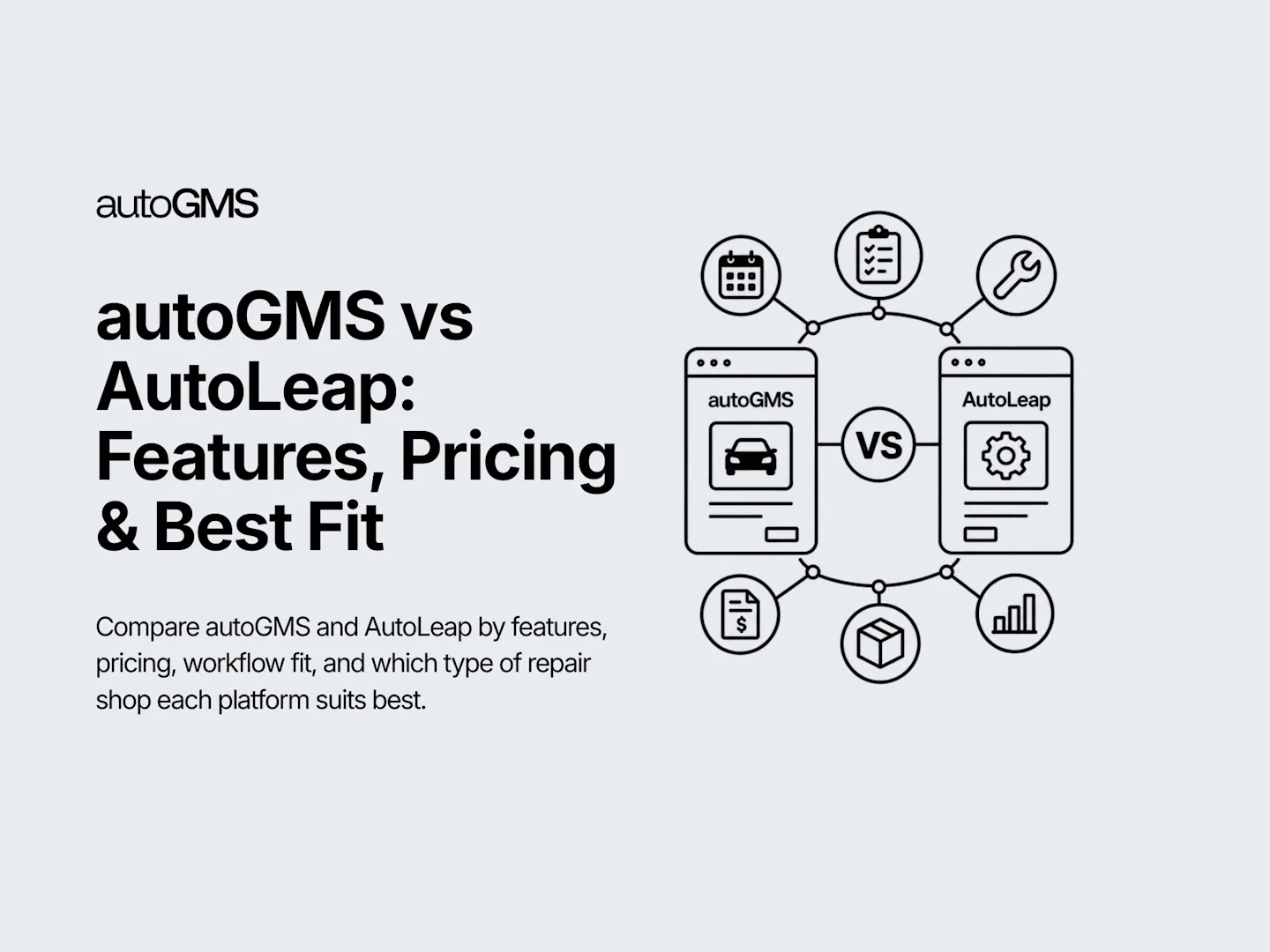
Compare autoGMS vs AutoLeap by features, pricing, workflow, inspections, inventory, reporting, onboarding, and best fit for your repair shop.
On this page
- autoGMS vs AutoLeap: Quick Buying Verdict
- autoGMS vs AutoLeap pricing: What Shops Should Compare
- Features, Workflow, and Ease of Use for Busy Garages
- Auto repair software reviews AutoLeap vs autoGMS: Buyer Signals
- AutoLeap alternatives for garage management software
- Key Takeaways
- How This Applies to Your Garage
- FAQs
autoGMS vs AutoLeap is a practical choice for repair shop owners who want fewer missed bookings, smoother job tracking, and clearer customer communication. Both platforms help manage daily shop operations, from scheduling and invoicing to CRM and reporting. The difference is how each one fits your workflow, team size, budget, and growth plans. In this comparison, we’ll look at pricing, features, ease of use, support, and best-fit use cases.
Use this comparison to shortlist the right system before booking demos. Start with the quick verdict below, then compare pricing, workflows, reviews, and fit against your shop’s daily needs.
Download the Auto Repair Software Buyer Checklist
Compare features, pricing, onboarding, integrations, support, and total cost before choosing your garage management system.
Open the auto repair software buyer checklist
Your PDF is open in a new tab. Didn’t open? Open it here. Other downloads now take one click.
autoGMS vs AutoLeap: Quick Buying Verdict
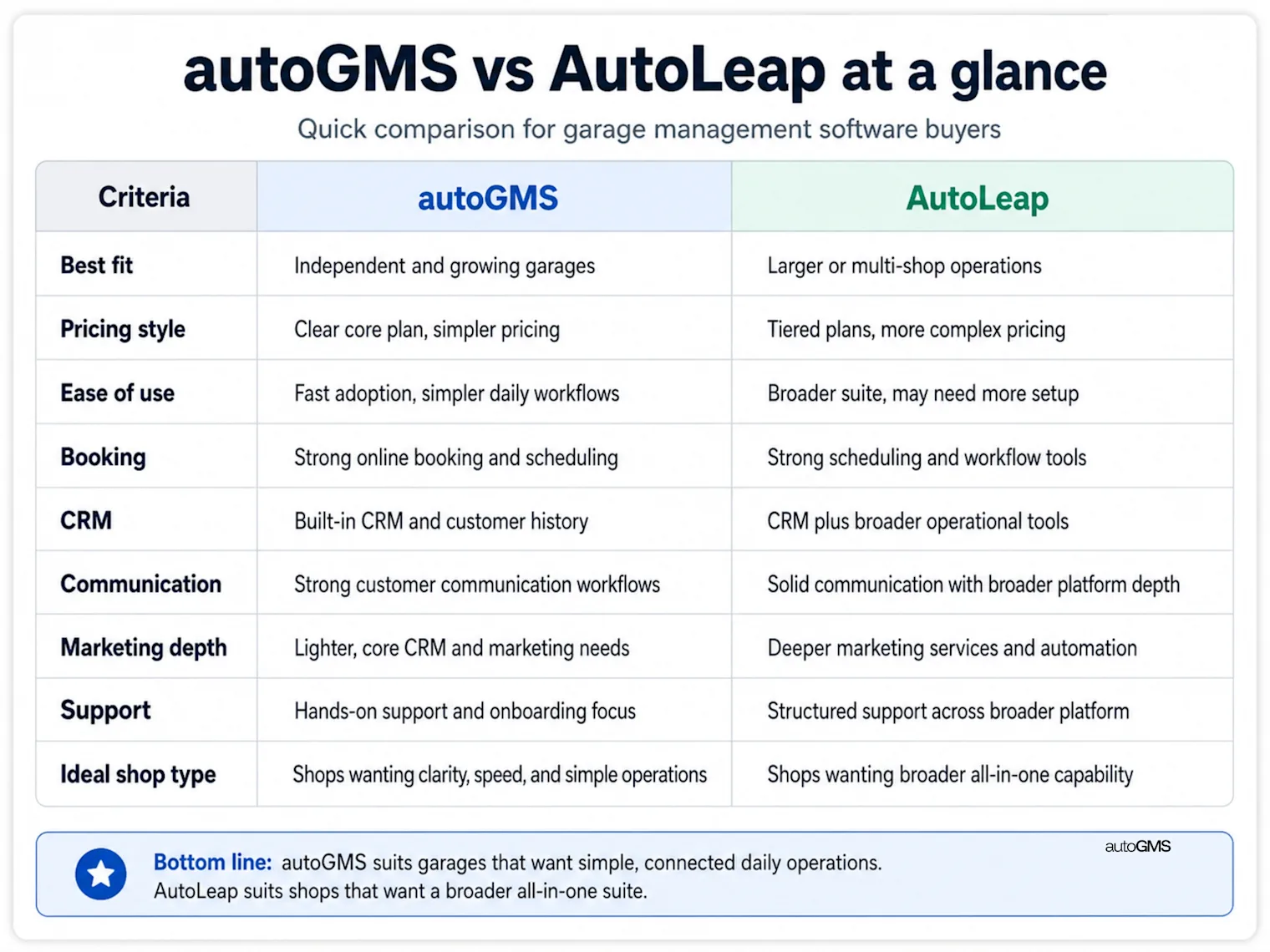
For most USA repair shops, the choice comes down to workflow fit. Choose autoGMS if you want simpler daily garage workflows, clear pricing, invoicing, job cards, CRM, booking, and customer communication in one place. Choose AutoLeap if you want a broader all-in-one platform with deeper marketing, reporting, payments, and multi-shop tools.
| Choose autoGMS if... | Choose AutoLeap if... |
| You want clear, simple pricing | You want more plan tiers |
| Your team needs quick adoption | You need advanced marketing depth |
| Booking and communication matter most | You need broader integrations |
| You run an independent or growing shop | You manage larger operations |
Once you know which profile sounds closer to your shop, compare the pricing model carefully. The lowest monthly price is not always the lowest total cost.
autoGMS vs AutoLeap pricing: What Shops Should Compare
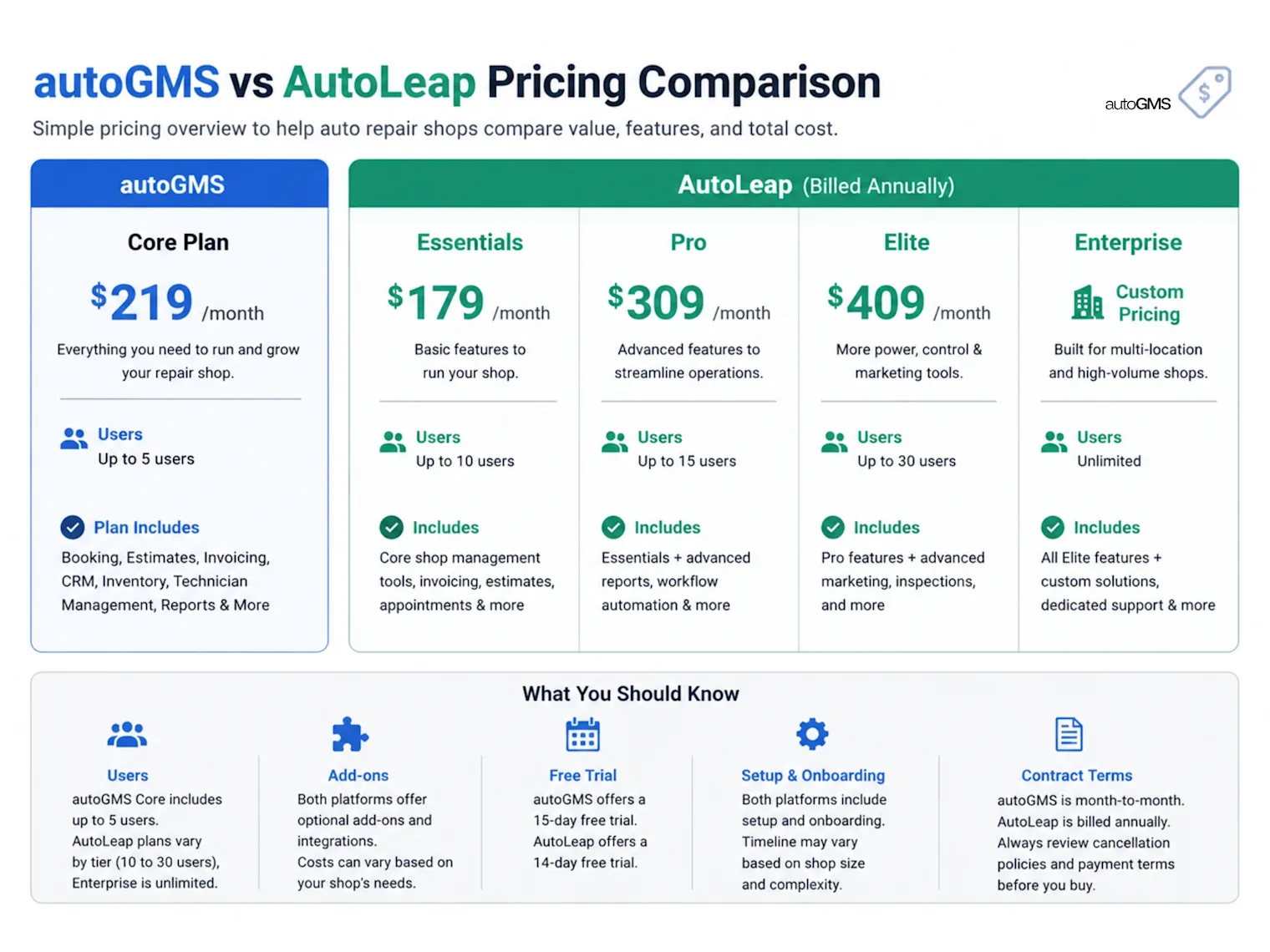
autoGMS vs AutoLeap pricing looks different at first glance. autoGMS shows one Core plan at $219/month, with booking, estimates, job cards, invoicing, accounting, and CRM included. Its pricing page also highlights no add-ons, no per-user fee, and a 14-day free trial. You can review autoGMS pricing details here.
AutoLeap shows annual-billing tiers: Essentials at $179/month, Pro at $309/month, Elite at $409/month, plus Enterprise custom pricing. Its visible plan cards also show user limits, with 3 users on Essentials, 5 users on Pro, and unlimited users on Elite and Enterprise.
Compare the full quote, not just the monthly plan price. Ask each vendor for a written breakdown covering users, setup, support, integrations, required add-ons, payment terms, and cancellation rules.
Features, Workflow, and Ease of Use for Busy Garages
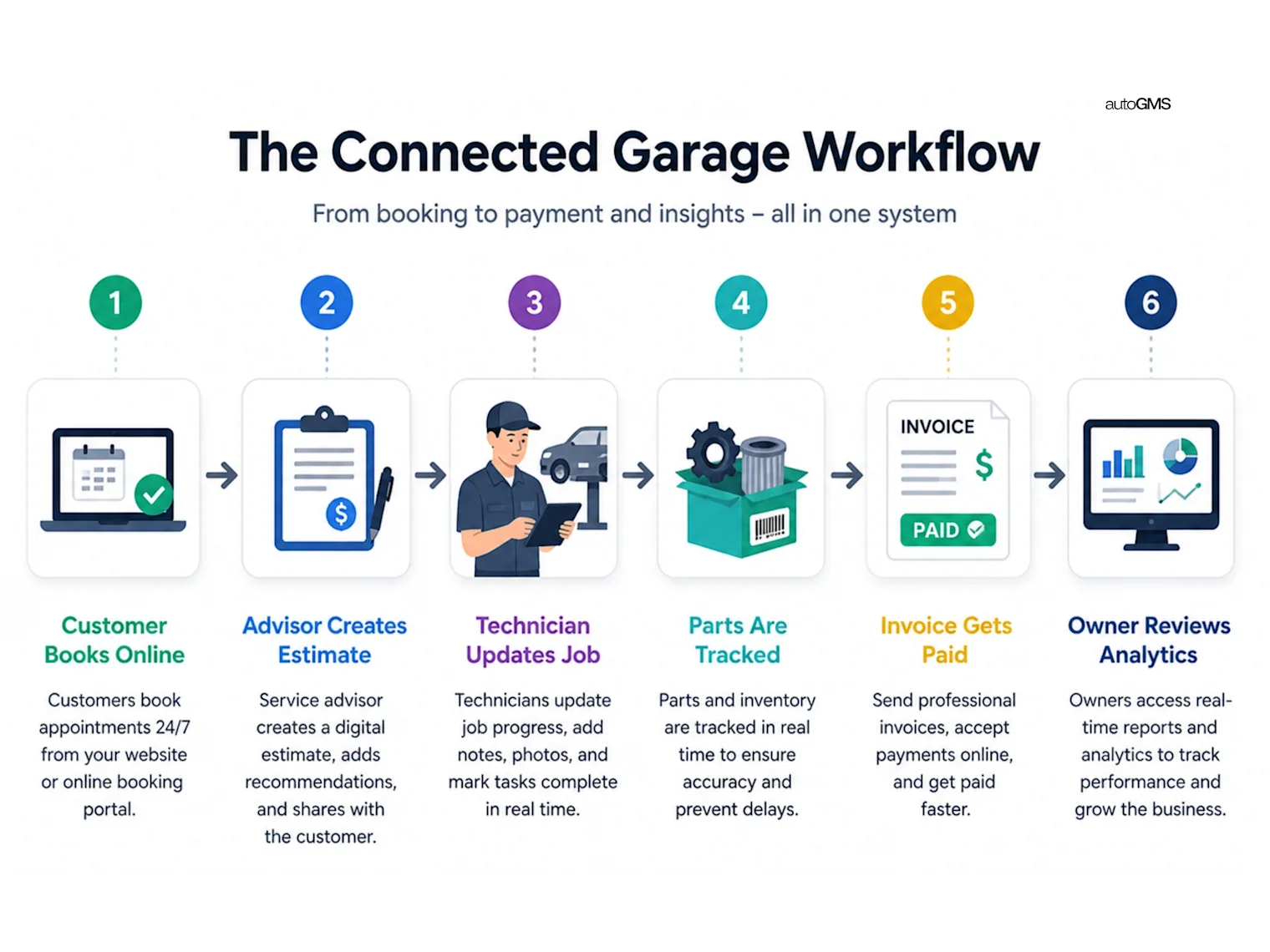
The best platform should remove steps from a busy repair day. autoGMS keeps booking, job cards, bay management, CRM, customer history, inventory, invoicing, technician workload, and analytics in one connected flow. Its feature page highlights booking, business analytics, customer management, job cards and bays, CRM and marketing, technician workload, inventory management, booking management, and automotive invoicing and finance. Its homepage also points to SMS, WhatsApp, and email communication, which supports fast customer updates without scattered tools. For a deeper breakdown, review the full garage management software features from autoGMS.
AutoLeap offers broader feature depth for shops that want a larger all-in-one system. Its feature page lists digital inspections, labor guides, Google Reviews, marketing services, scheduling, 1-click invoicing, integrated payments, digital estimates, technician app, work board, inventory, CRM, accounting, and reporting. Its pricing page also shows add-ons and multi-shop management options.
Auto repair software reviews AutoLeap vs autoGMS: Buyer Signals
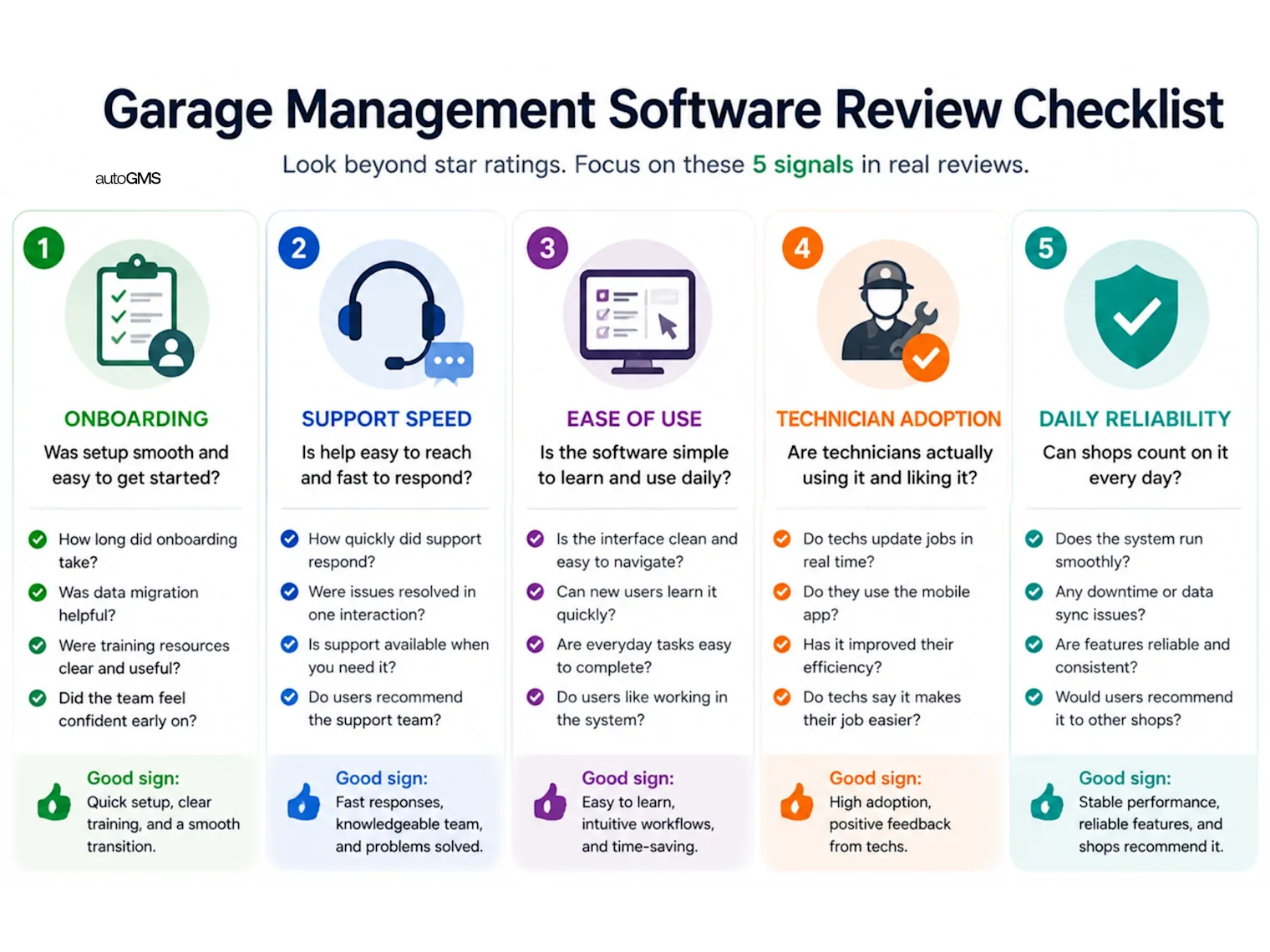
When searching Auto repair software reviews AutoLeap vs autoGMS, treat reviews as buyer signals, not just star ratings. The most useful autoGMS vs AutoLeap reviews mention support quality, onboarding, ease of use, feature adoption, and daily reliability.
Pay close attention to who wrote the review. A service advisor may focus on estimates, customer messages, and invoicing. A technician may care more about job updates, inspections, and mobile access. An owner may focus on reporting, profitability, missed bookings, and team adoption.
Prioritize reviews from shops like yours, independent garages, multi-location businesses, service advisors, technicians, or owners. Actionable takeaway: shortlist reviews that match your shop size, team structure, and top pain points before booking a demo.
AutoLeap alternatives for garage management software
Many buyers search for AutoLeap alternatives for garage management software when pricing, feature fit, onboarding, complexity, customer communication, or regional needs do not match their shop. AutoLeap is a strong all-in-one option, but not every garage needs a larger platform with advanced marketing and multi-shop tools. Some shops may also compare Shopmonkey, Shop-Ware, Tekmetric, Autorox, and Torque360 before deciding.
autoGMS is a credible AutoLeap alternative for repair shops that want clear pricing, online booking, invoicing, CRM, customer history, and simpler daily operations in one connected system. If you are comparing more shop management platforms, see the autoGMS vs Tekmetric comparison here.
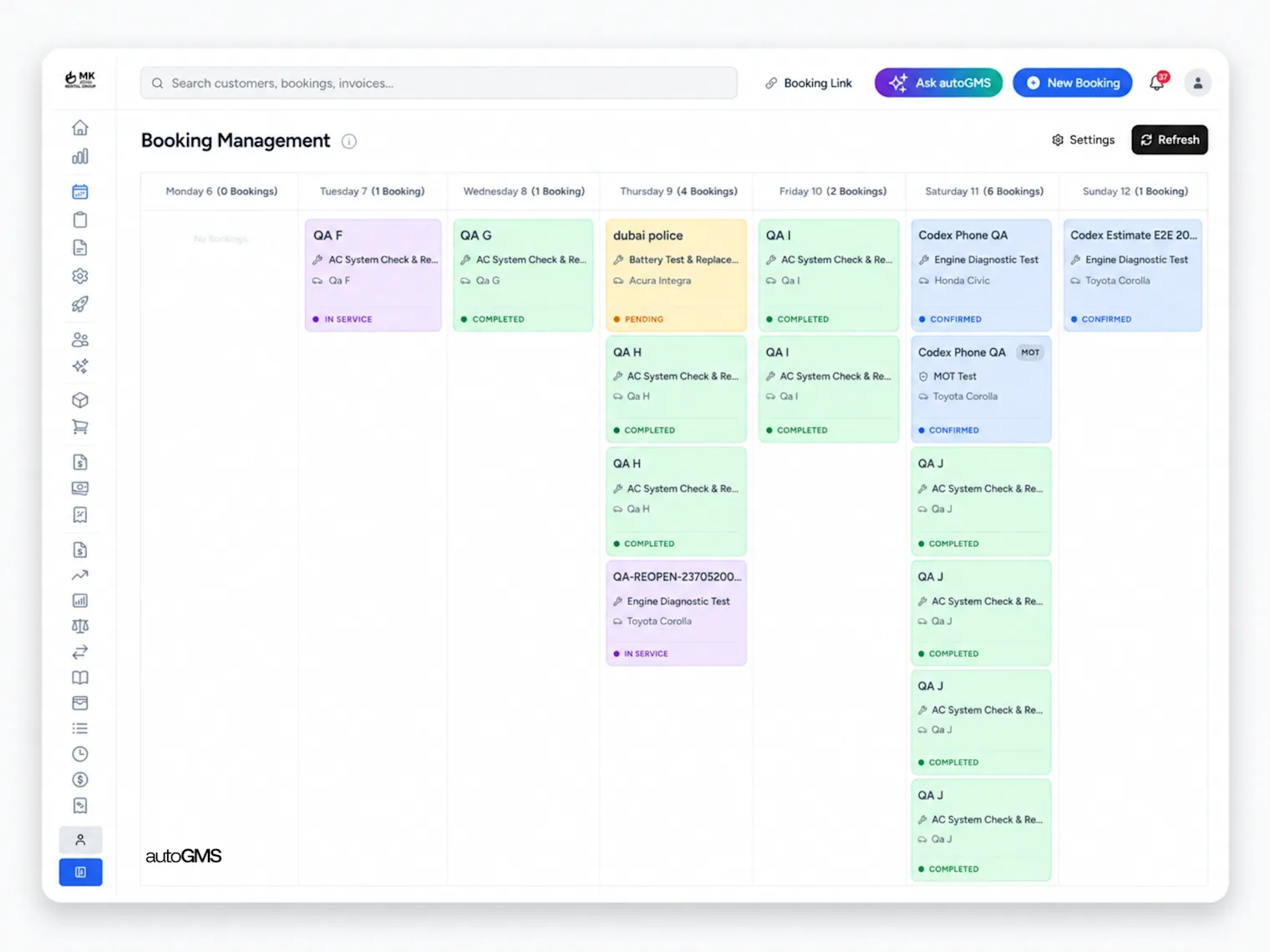
Shops can also use garage technician management software to assign work by skills and availability, balance workloads, and track progress from the workshop floor.
Key Takeaways
autoGMS vs AutoLeap is a fit decision, not only a feature-count decision.
autoGMS is strongest for clear pricing, daily usability, booking, CRM, and communication-led workflows.
AutoLeap is strongest for shops that want a broad all-in-one suite with deeper marketing and operational modules.
Pricing should include setup, users, support, add-ons, and contract terms.
Use the scorecard below to test each platform against your shop’s real workflow.
How This Applies to Your Garage
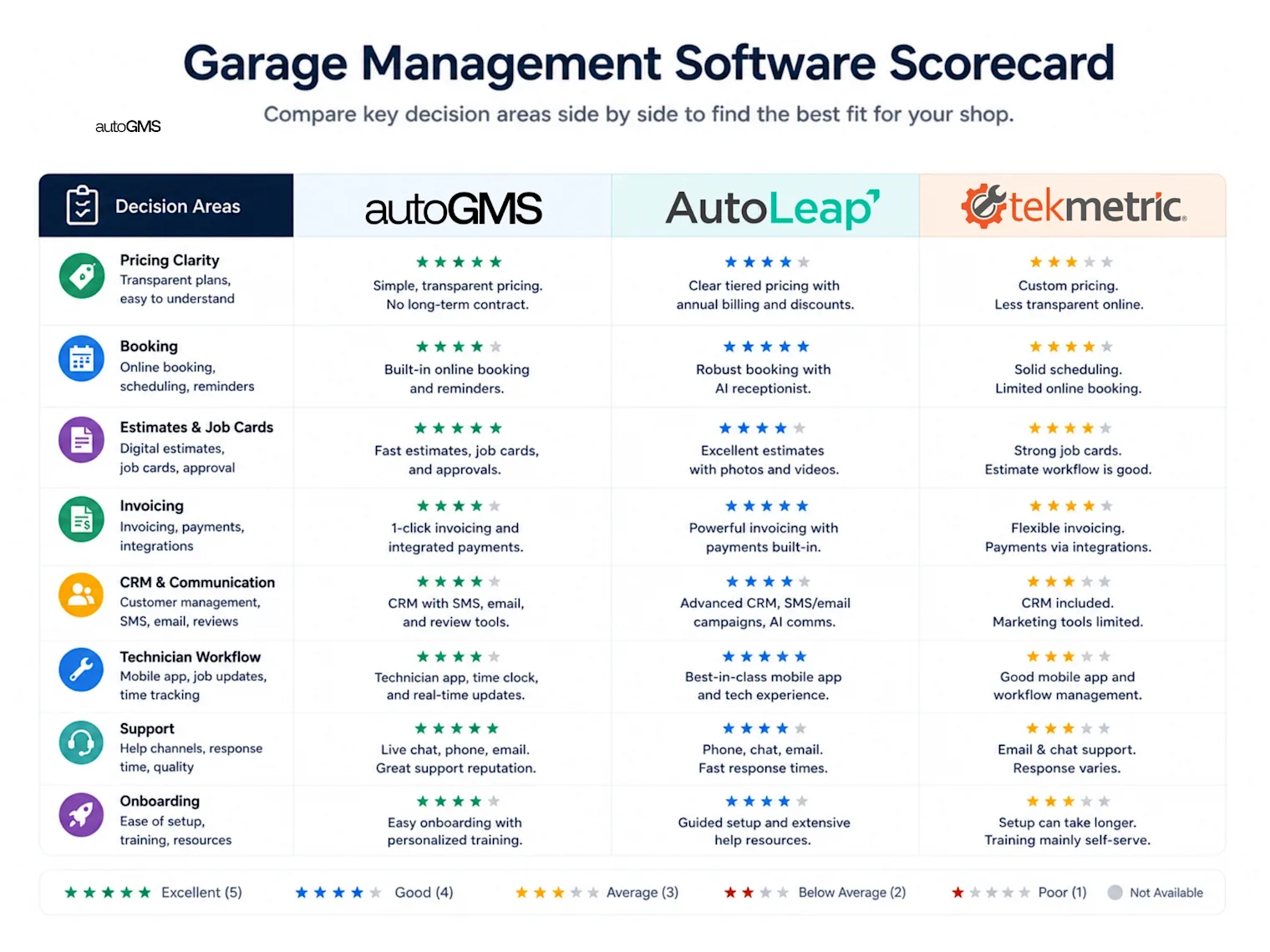
Before booking demos, compare each platform against your real shop problems. Ask: Do we lose jobs from missed bookings? Do invoices take too long? Do technicians update jobs clearly? Do we need stronger review and marketing automation?
Owners should also review whether the platform provides useful garage analytics and performance reporting for revenue, jobs, technician output, and workshop trends.
Score each platform from 1 to 5, where 1 means weak fit and 5 means strong fit.
| Decision area | What to check | autoGMS | AutoLeap | Other tool |
| Pricing clarity | Is the monthly cost and included feature list clear? | 1 to 5 | 1 to 5 | 1 to 5 |
| Booking | Can customers book easily without calling? | 1 to 5 | 1 to 5 | 1 to 5 |
| Estimates and job cards | Can advisors move jobs forward quickly? | 1 to 5 | 1 to 5 | 1 to 5 |
| Invoicing | Can approved work become an invoice without duplicate entry? | 1 to 5 | 1 to 5 | 1 to 5 |
| CRM and communication | Can the shop manage follow-ups, history, and reminders? | 1 to 5 | 1 to 5 | 1 to 5 |
| Technician workflow | Can technicians update jobs clearly during the day? | 1 to 5 | 1 to 5 | 1 to 5 |
| Support and onboarding | Can your team adopt it without slowing down the shop? | 1 to 5 | 1 to 5 | 1 to 5 |
Book demos only after this checklist is complete. That keeps the comparison focused on fit, not just features.
Conclusion
AutoLeap may suit shops that want a broader suite with advanced marketing, payments, reporting, and operational modules. autoGMS is a strong fit for garages that want simple, connected daily operations across booking, CRM, invoicing, customer communication, and shop workflow. For independent and growing garages that value clarity, ease of use, and faster adoption, autoGMS is the recommended shortlist choice. Compare your current workflow against the complete garage management system from autoGMS, then book a demo.
Frequently asked questions
Is autoGMS better than AutoLeap?
Neither platform is universally better. autoGMS is better for shops that want clear pricing, simple daily workflows, booking, invoicing, CRM, and customer communication. AutoLeap may be better for shops that want deeper all-in-one features, marketing services, payments, reporting, and multi-location options. The right choice depends on your team, workflow, budget, and growth plans.
How does autoGMS vs AutoLeap pricing compare?
The visible autoGMS pricing page shows autoGMS Core at $219/month. AutoLeap’s visible annual-billing tiers show Essentials at $179/month, Pro at $309/month, Elite at $409/month, and Enterprise with custom pricing. Prices can change, so compare included features, setup, support, user limits, add-ons, billing terms, and cancellation rules before choosing.
Which platform is easier for independent repair shops?
Independent repair shops often benefit from software that is simple to adopt, quick to train on, and focused on daily tasks. autoGMS fits shops that want connected booking, job cards, customer history, invoicing, CRM, and technician workflows without managing too many disconnected tools. AutoLeap may suit teams that need broader modules and more advanced operational depth.
What should I check in autoGMS vs AutoLeap reviews?
When reading autoGMS vs AutoLeap reviews, look beyond star ratings. Check comments about onboarding, support speed, ease of use, reporting, booking reliability, technician adoption, and daily system performance. Prioritize reviews from shops like yours, especially independent garages, multi-location teams, service advisors, technicians, and owners with similar pain points.
What are the best AutoLeap alternatives for garage management software?
autoGMS is a strong AutoLeap alternative for shops that want clear pricing, connected booking, invoicing, CRM, customer history, and simpler daily garage workflows. Buyers may also compare Shopmonkey, Shop-Ware, Tekmetric, Autorox, and Torque360 depending on budget, region, features, integrations, and shop size. Keep your shortlist focused so demos stay useful.