Vehicle Inspection Checklist for Auto Repair Shops
Learn how to use a vehicle inspection checklist in auto repair shops, including a full vehicle inspection checklist, procedures, and digital vehicle inspections.
On this page
A vehicle inspection checklist is an essential tool used by auto repair shops to ensure every vehicle is inspected consistently and safely. During routine inspections, technicians review key components such as tires, brakes, fluids, lights, and steering systems to identify potential problems before they become serious repairs.
These inspections improve vehicle safety and help shops deliver better customer service. A structured automotive inspection checklist also ensures that nothing is missed during the inspection process. Today, many auto shops are moving from paper checklists to digital vehicle inspections using modern digital vehicle inspection software to document findings, share reports, and maintain accurate inspection records.
Why Vehicle Inspections Matter for Auto Repair Shops
Regular vehicle inspections play a critical role in helping auto repair shops maintain high standards of vehicle safety and service quality. During a routine inspection, technicians examine key systems such as brakes, tires, steering, and lights to detect problems before they become serious failures. Identifying issues early helps prevent accidents and ensures that vehicles remain safe to operate on the road.
For auto shops, using a structured automotive inspection checklist improves efficiency and reduces the risk of missing important components during the inspection process. This structured approach also strengthens customer service, since customers receive clear documentation of their vehicle’s condition through a vehicle inspection log. Inspections are especially important for commercial vehicles and fleet vehicles, where consistent safety checks help prevent costly breakdowns and operational downtime.
What Is a Vehicle Inspection Checklist?
A vehicle inspection checklist is a structured list used by technicians to examine a vehicle’s condition during routine vehicle inspections. Instead of relying on memory, mechanics follow a standardized automotive inspection checklist to make sure every important component is checked. This approach helps auto repair shops maintain consistent service quality and improves overall vehicle safety.
A typical vehicle checklist includes critical systems such as tires, brakes, lights, steering, suspension, and fluid levels. These components are inspected because they directly affect how safely a vehicle operates on the road.
Using a checklist also supports a clear vehicle inspection procedure, where technicians record results in a vehicle inspection log. This documentation helps shops track vehicle condition over time, identify potential issues early, and provide customers with transparent inspection reports.
Full Vehicle Inspection Checklist (Key Areas to Check)
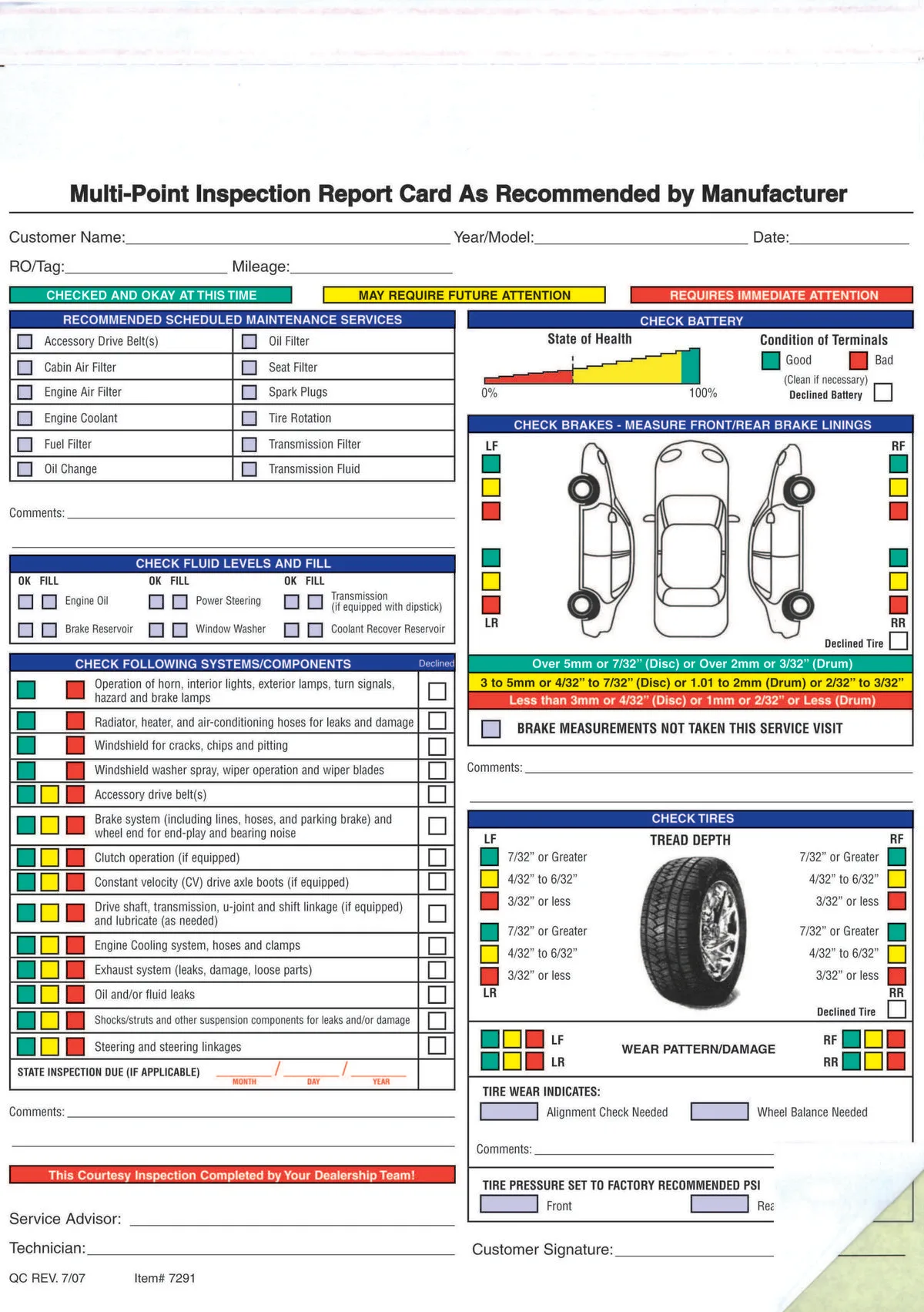
A full vehicle inspection checklist helps technicians examine all critical vehicle systems in a clear and organized way. In many auto repair shops, this process is called a multi - point vehicle inspection checklist because multiple components are reviewed during the inspection. This structured approach ensures that mechanics do not miss any important safety or performance issues.
Most vehicle inspections focus on the main systems that affect vehicle safety, including the engine, brakes, tires, steering, and electrical systems. These inspections help technicians detect wear, leaks, or damage before the vehicle develops major problems.
Below are the key areas usually included in a vehicle inspection checklist.
Engine and Fluids
Technicians inspect the engine area to check fluid levels and detect leaks.
Typical checks include:
Engine oil condition
Coolant level
Brake fluid
Transmission fluid
Regular fluid checks help prevent overheating and mechanical failure.
Brakes and Suspension
The braking system is essential for vehicle safety, so it is inspected carefully.
Brake pads and rotors
Brake lines and fluid levels
Suspension components
Steering parts
Brake inspections ensure the vehicle can stop safely and handle properly.
Tires and Wheels
Tires are inspected because they directly affect stability and control.
Tire pressure
Tread depth
Uneven wear patterns
Wheel condition
Proper tire checks help prevent accidents and improve vehicle performance.
Electrical and Safety Systems
Technicians also verify that safety components are working correctly.
Headlights and signals
Battery condition
Seat belts
Windshield wipers
Checking these systems ensures the vehicle remains safe and road ready.
Vehicle Inspection Procedure Step by Step
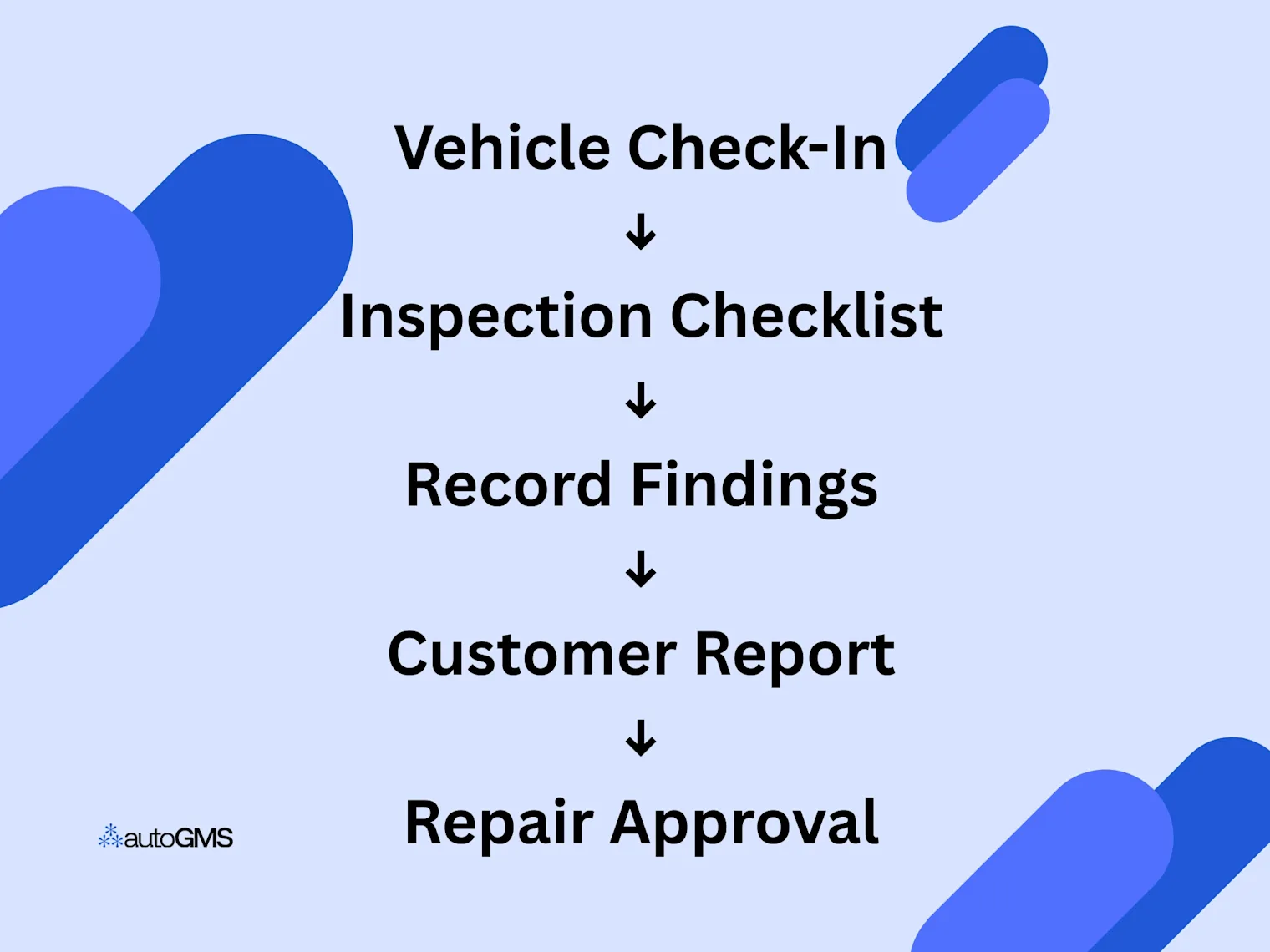
A clear vehicle inspection procedure helps auto repair shops perform consistent and accurate vehicle inspections. By following a step by step process, technicians can examine each system carefully and record findings in a vehicle inspection log. This structured workflow reduces mistakes and ensures that all safety components are reviewed before the vehicle leaves the shop.
A typical vehicle inspection procedure includes the following steps:
Verify vehicle information: The technician records details such as the make, model, and VIN before starting the inspection.
Perform a visual inspection: Mechanics inspect the exterior, tires, lights, and windshield to identify visible damage or wear.
Check mechanical systems: Key components such as brakes, steering, suspension, fluids, and belts are inspected to ensure proper operation.
Record results and inform the customer: The findings are saved in a vehicle inspection log and explained to the customer to support better customer service and repair decisions.
Many shops now rely on auto repair shop management software to track inspections, repair steps, and service documentation.
Digital Vehicle Inspection Software for Modern Auto Shops
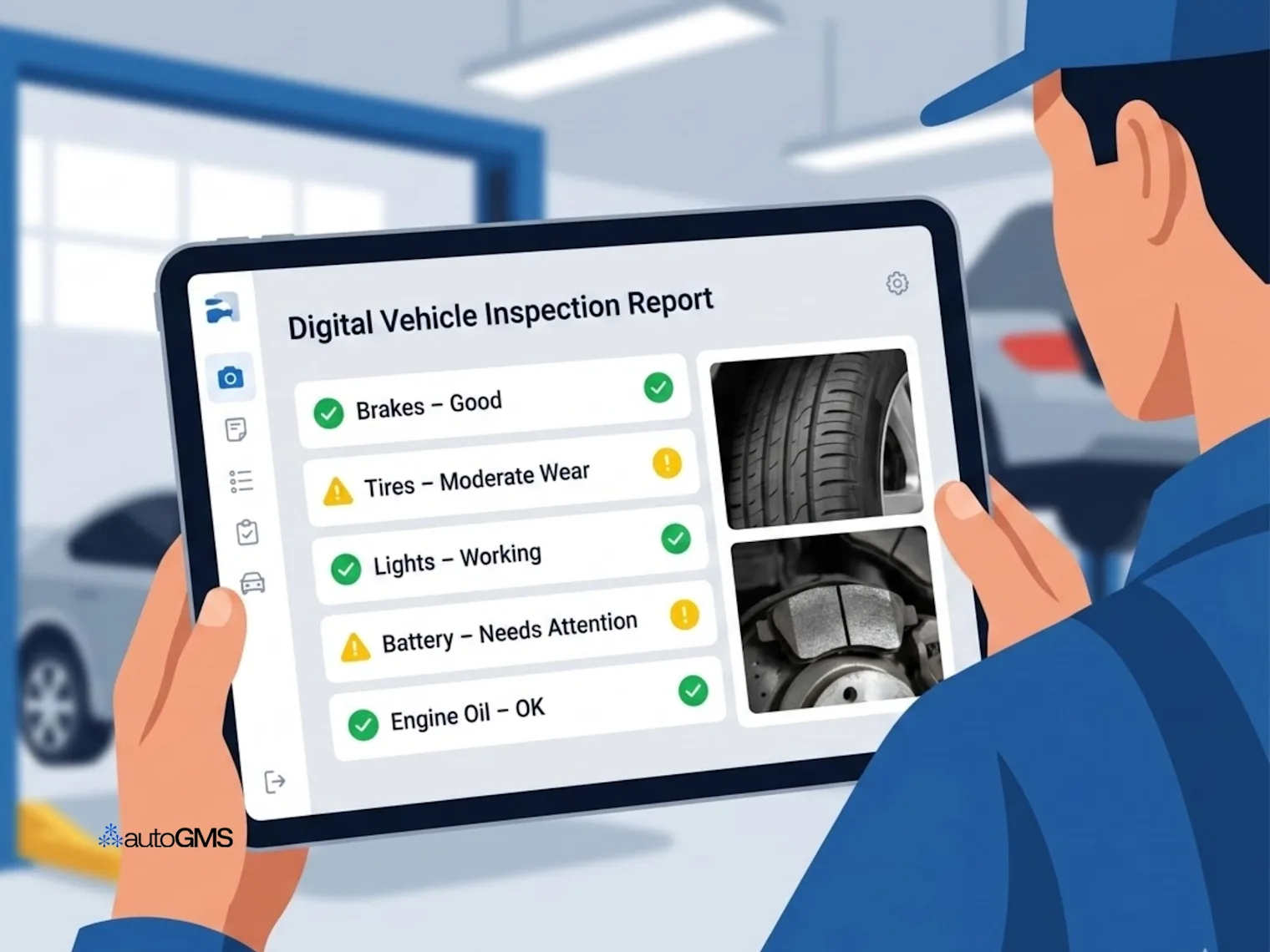
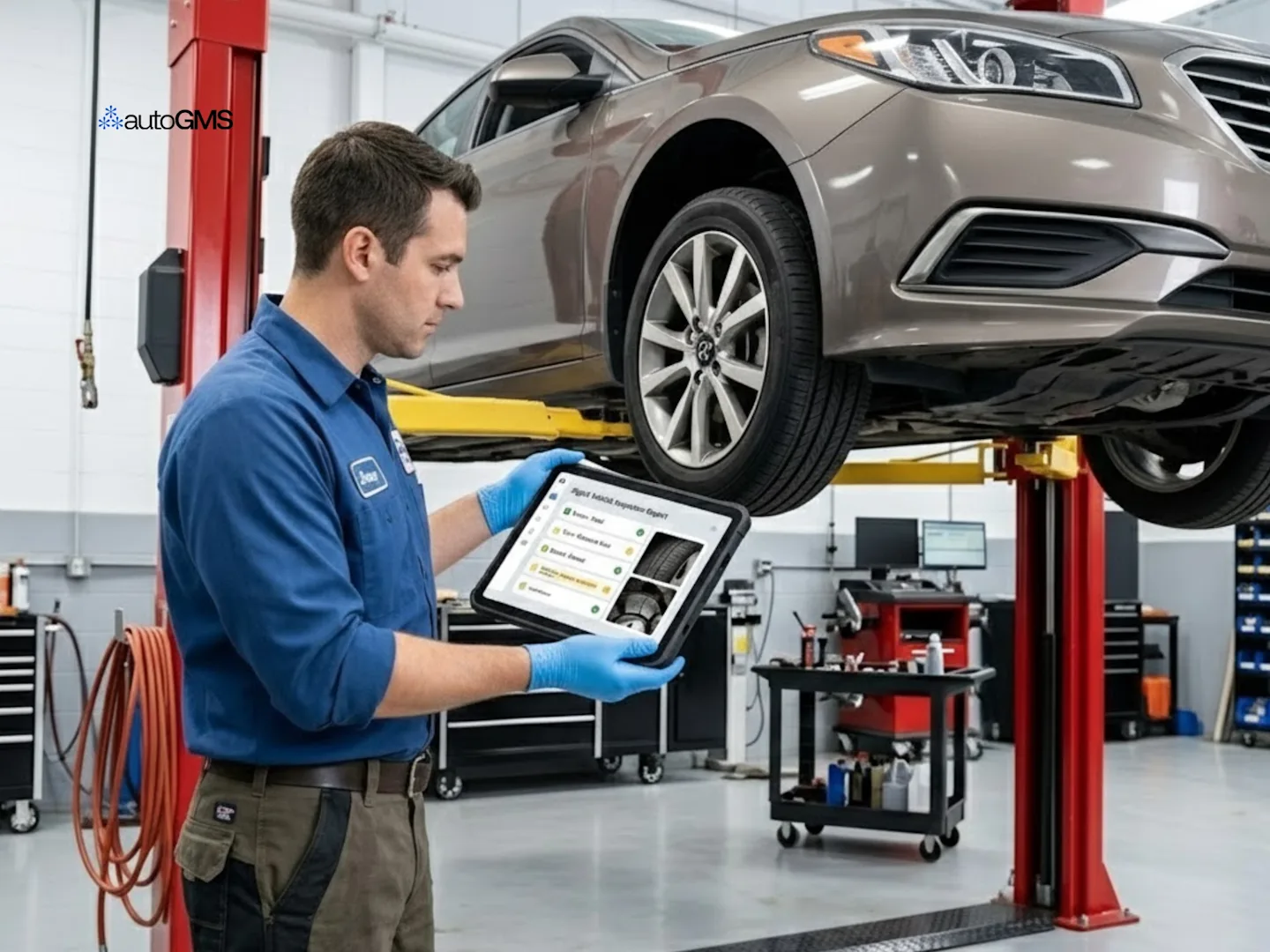
Many auto repair shops are replacing paper forms with digital vehicle inspections using modern digital vehicle inspection software. Instead of filling out a paper vehicle checklist, technicians use a tablet or smartphone to complete the inspection and record results directly in the system.
During digital vehicle inspections, technicians can take photos or videos of worn parts, fluid leaks, or damaged components and attach them to the inspection report. This visual documentation helps customers clearly understand the condition of their vehicle and the repairs that may be needed.
Using digital vehicle inspection software also improves workflow inside auto shops. Inspection reports can be shared instantly through email or text, reducing paperwork and helping service advisors create estimates faster.
When integrated with shop management software, digital inspections create accurate records, improve customer service, and help shops maintain consistent vehicle inspections for every vehicle they service.
Key Takeaways
A structured vehicle inspection checklist helps auto repair shops examine key components like brakes, tires, lights, and fluids in a consistent way.
A multi-point vehicle inspection checklist allows technicians to review several mechanical and safety systems during one service visit, improving overall vehicle safety.
Following a clear automotive inspection procedure helps mechanics detect issues early and reduce the risk of breakdowns or expensive repairs.
Recording findings in a vehicle inspection log creates a useful maintenance history and helps shops track the condition of each car over time.
Using digital vehicle inspection software together with shop management software improves workflow, strengthens customer communication, and builds trust through transparent service reports.
Conclusion
A structured vehicle inspection checklist helps auto repair shops maintain consistent service quality while protecting vehicle safety and customer safety. By carefully reviewing key systems such as brakes, tires, lights, and fluids, technicians can identify mechanical issues early and prevent small problems from becoming expensive repairs. Regular safety checks also help ensure vehicles remain reliable and compliant with safety standards.
Modern auto shops are also improving their workflow by adopting digital vehicle inspection software and integrated shop management software. These tools allow technicians to document findings, attach photos or videos, and share clear reports with customers. This transparency builds trust and helps service advisors communicate repair recommendations more effectively while keeping accurate maintenance records for every vehicle serviced.
Frequently asked questions
What is included in a full vehicle inspection checklist?
A full vehicle inspection checklist usually covers key safety and mechanical systems such as brakes, tires, lights, steering, suspension, and fluid levels. Technicians may also check components like the battery, windshield wipers, and mirrors to ensure the vehicle is safe to operate.
What is a multi - point vehicle inspection checklist?
A multi - point vehicle inspection checklist is a detailed review that examines several areas of a vehicle during one service visit. Mechanics inspect components such as tires, brakes, lights, and suspension to identify wear or safety issues. This approach helps technicians detect problems early and maintain overall vehicle reliability.
What is digital vehicle inspection software?
Digital vehicle inspection software allows technicians to complete inspections using a tablet or smartphone instead of paper forms. Mechanics can attach photos, videos, and notes to the inspection report, making it easier to explain repair needs to customers and maintain accurate service records for auto repair shops.