
Auto Parts Inventory Management: How to Prevent Stock Losses
Improve auto parts inventory management with practical tips to prevent stock losses, track parts, reduce waste, and maintain accurate inventory records.

On this page
- What Is Auto Parts Inventory Management?
- Why Auto Repair Shops Lose Parts and Inventory
- 5 Ways to Improve Inventory Control and Prevent Stock Losses
- How to Measure Inventory Accuracy and Prevent Stockouts
- How Auto Parts Inventory Management Software Helps
- How This Applies to Your Garage
- Key Takeaways
- FAQs
A missing brake pad, an unrecorded oil filter, or a part ordered twice might seem like a small mistake. But for auto repair shops, these errors can quickly add up, increasing costs, delaying repairs, and affecting customer satisfaction.
Effective auto parts inventory management helps garages keep track of what they have, where each part is stored, and how it is used. Without proper inventory control, parts can go missing, stock levels become unreliable, and money gets tied up in items that sit unused.
The good news is that preventing stock losses doesn't have to be complicated. With clear processes and the right tools, garages can improve inventory accuracy, reduce waste, and keep daily operations running smoothly.
What Is Auto Parts Inventory Management?
Auto parts inventory management is the process of tracking, organising, and controlling the parts a garage buys, stores, and uses during vehicle repairs. It helps auto repair shops maintain accurate stock levels, avoid unnecessary purchases, and ensure the right parts are available when needed.
A good system tracks more than just quantities. Each part should have a clear record that includes its name, part number, storage locati0n, purchase cost, and current availability. It should also show when a part arrives, which repair order it was used for, and whether any unused items were returned.
For example, imagine a garage has ten oil filters in stock. A technician takes two for scheduled services, but only one gets recorded. The inventory system now shows nine filters when there are actually eight. Over time, these small errors create stock discrepancies and make inventory planning difficult.
Effective inventory control keeps physical stock aligned with recorded quantities. It also helps garages identify slow-moving parts, monitor spending, and prevent stock losses before they become expensive problems.
Why Auto Repair Shops Lose Parts and Inventory
Stock losses don't always happen because parts are stolen. In many auto repair shops, they result from small mistakes that go unnoticed during daily operations. Without proper inventory control, these errors can build up and affect profitability.
Here are some of the most common causes:
Unrecorded parts usage: Technicians take parts from storage without linking them to a repair order. The stock records remain unchanged, even though the parts have been used.
Incorrect deliveries: Suppliers send the wrong quantities or parts, but staff update inventory without checking what actually arrived.
Duplicate inventory records: The same part gets entered under different names or part numbers, making stock levels difficult to track.
Poor storage organisation: Parts are placed in the wrong locations, misplaced, or forgotten, leading staff to order replacements unnecessarily.
Unmanaged returns: Unused parts aren't returned to inventory correctly, while defective items remain recorded as available stock.
Another common problem is idle parts. These are items that remain unused for long periods, often because of overordering or poor inventory planning. They take up valuable storage space and tie up money that could be used elsewhere in the business.
These problems also affect the customer experience. A garage might promise a repair will be completed that afternoon, only to discover the required part isn't available. This leads to delays, additional costs, and potentially damaged customer trust.
The key is to identify why stock discrepancies occur, rather than simply correcting the quantities. Understanding where parts are lost or misrecorded is the first step towards preventing the same mistakes from happening again.
5 Ways to Improve Inventory Control and Prevent Stock Losses
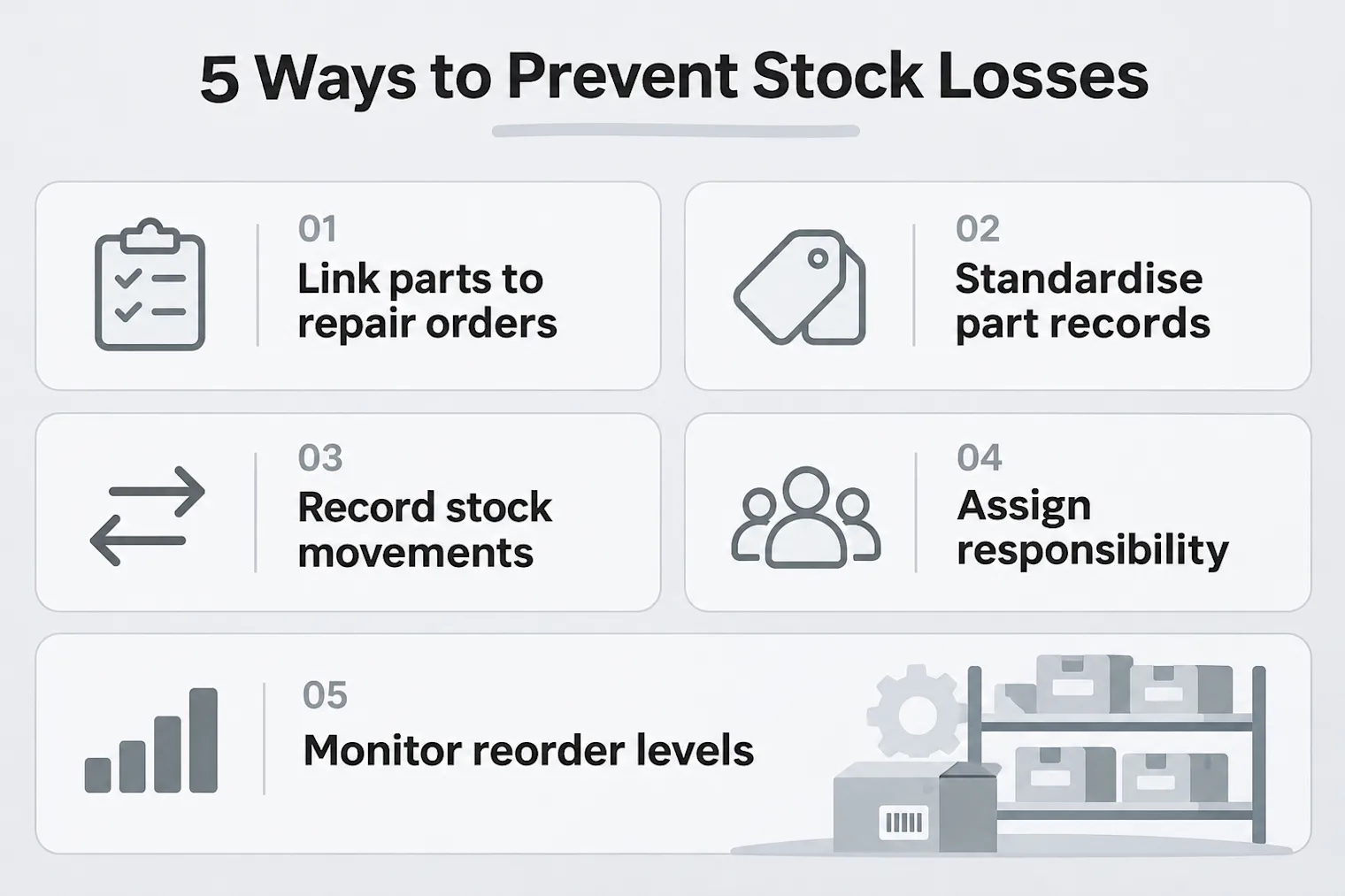
Preventing inventory losses starts with having clear processes for how parts are received, stored, and used. Here are five practical ways auto repair shops can improve inventory control and reduce costly mistakes.
1. Link Every Part to a Repair Order
Every part taken from storage should be linked to a specific repair order. This creates a record of which vehicle received the part, how many units were used, and who handled the job.
If a technician takes three spark plugs but only uses two, the unused part should be returned to inventory. This keeps stock levels accurate and prevents parts from disappearing without explanation.
2. Standardise Part Names and Storage Locations
Using different names for the same part creates confusion and duplicate inventory records. For example, one employee might enter "BMW Oil Filter", while another records the same item as "Oil Filter BMW 320i".
Assign each part a unique SKU or part number and a designated storage location. Where relevant, record vehicle compatibility and manufacturer references to make parts easier to identify.
3. Record Every Stock Movement
Parts inventory tracking should cover every movement, not just purchases and sales.
This includes supplier deliveries, parts issued to technicians, unused returns, damaged items, and stock adjustments. Barcode scanning can make these transactions faster and reduce manual entry errors.
The basic rule is simple: no part should leave or enter storage without being recorded.
4. Assign Clear Inventory Responsibilities
When everyone can change stock records without accountability, identifying mistakes becomes difficult.
Assign responsibility for receiving deliveries, issuing parts, and approving adjustments. An inventory manager or designated employee should regularly review discrepancies and investigate unexplained changes.
This doesn't mean every garage needs a dedicated inventory manager. Smaller workshops can assign these tasks to an existing team member.
5. Set Reorder Levels and Monitor Idle Parts
Ordering too much ties up cash, while ordering too little can delay customer repairs.
Set minimum stock levels based on how frequently parts are used and how long suppliers take to deliver them. Review idle parts regularly to identify items that are rarely used or no longer needed.
Good inventory planning helps garages maintain the right balance between availability and cost, without filling shelves with unnecessary stock.
How to Measure Inventory Accuracy and Prevent Stockouts
Even with good inventory control, mistakes can still happen. Regular stock checks help auto repair shops identify discrepancies early and avoid running out of essential parts.
Compare Physical Stock With Inventory Records
Your inventory records should reflect what's actually available on your shelves. One way to check this is through cycle counting, where staff count a small selection of parts regularly instead of checking everything at once.
Start with high-value or frequently used items, such as brake pads, filters, and spark plugs. If the recorded quantity doesn't match the physical count, investigate the difference before adjusting the system.
Set Minimum Stock Levels
Minimum stock levels help garages know when it's time to order more parts.
For example, imagine your garage uses four oil filters daily, and your supplier takes three days to deliver. You'll need at least 12 filters to cover normal demand during that period.
A simple reorder point formula is:
Reorder point = (Average daily usage × Supplier lead time) + Safety stock
If you keep four additional filters as safety stock, your reorder point becomes 16 filters.
Monitor Key Inventory Metrics
Review these three indicators each month:
Inventory accuracy: How closely recorded quantities match physical stock.
Stockout frequency: How often required parts are unavailable when needed.
Inventory turnover: How quickly parts are used and replaced over a given period.
Tracking these figures helps identify weak points in your inventory management process and improve purchasing decisions.
The goal isn't to keep every part in stock. It's to have reliable records and enough of the right parts available when customers need them.
How Auto Parts Inventory Management Software Helps
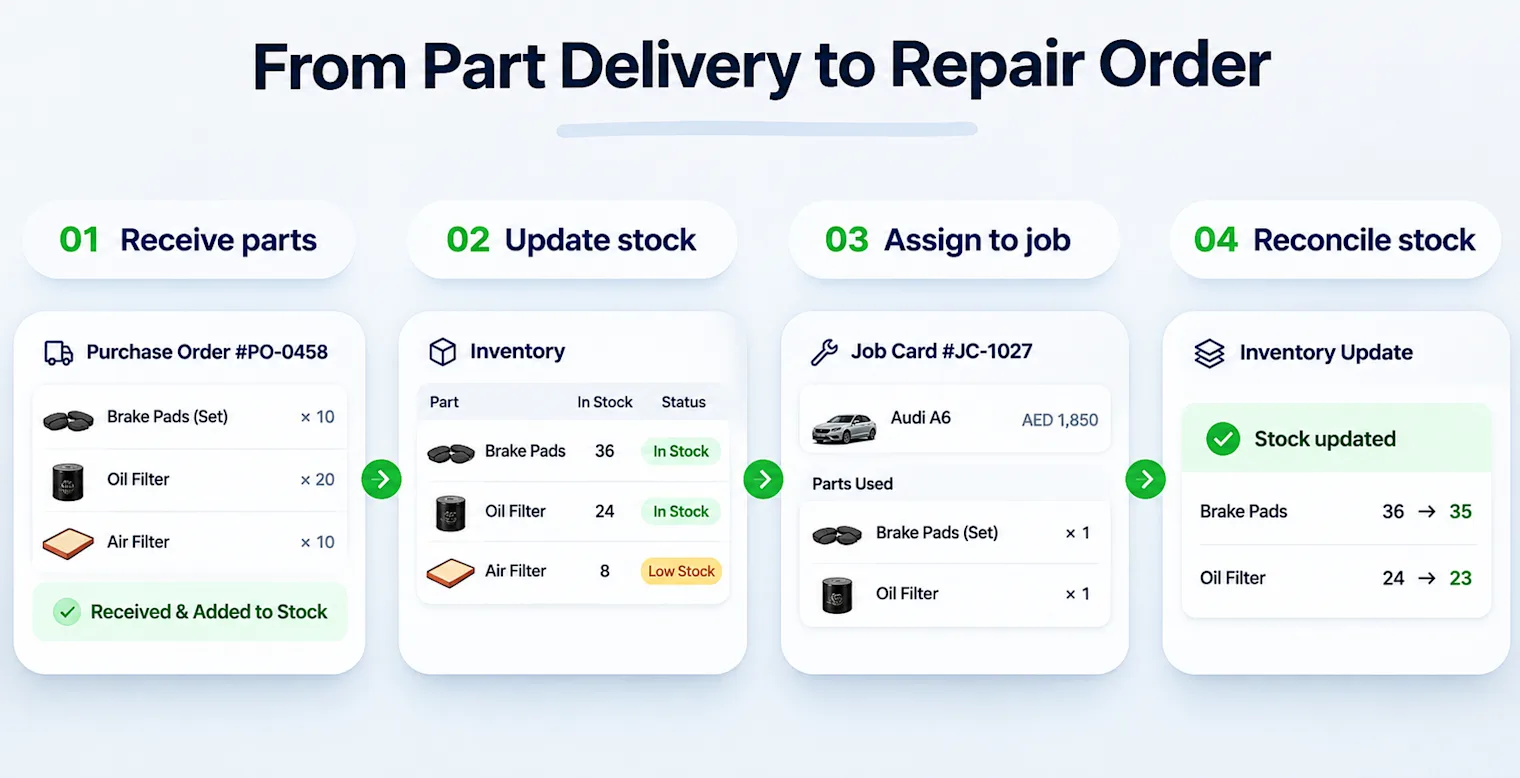
Managing inventory manually becomes harder as a garage grows. Spreadsheets and paper records depend on staff remembering to update every transaction. Even small mistakes can lead to inaccurate stock levels and unnecessary purchases.
Auto parts inventory management software helps by connecting stock records directly to daily workshop operations. Instead of tracking parts separately, garages can manage purchases, usage, and availability in one system.
For example, autoGMS inventory management software helps auto repair shops:
Track parts used on repairs: Assign parts to repair orders and automatically update stock quantities.
Monitor stock levels: Identify low-stock items and set minimum quantities to avoid unexpected shortages.
Manage purchase orders: Order parts from suppliers, record deliveries, and update inventory when stock arrives.
Use barcode scanning: Find parts quickly and reduce manual data entry.
Track inventory movements: Review stock adjustments, parts usage, and transaction history to investigate discrepancies.
When a repair is completed, autoGMS also allows garages to confirm actual parts consumption and return unused quantities to stock. This helps maintain inventory accuracy and reduces unrecorded losses.
Better parts tracking can also improve the customer experience. When staff know which parts are available, they can plan repairs more accurately and reduce avoidable delays.
Software doesn't replace good inventory control procedures, but it makes them easier to follow consistently.
How This Applies to Your Garage
Improving inventory control doesn't require a complete overhaul of your workshop. Start with a few simple routines that help your team keep accurate records and prevent stock losses.
Here's a practical checklist:
Daily: Check low-stock alerts, record parts used on repair orders, and ensure unused items are returned to inventory.
Weekly: Count selected high-value or frequently used parts and investigate any stock discrepancies.
Monthly: Review idle parts, adjust reorder levels, and check supplier deliveries against purchase orders.
For smaller auto repair shops, one employee can manage these checks. Larger garages may benefit from assigning an inventory manager to oversee stock accuracy across the workshop.
The most important part is consistency. A few minutes spent checking inventory regularly can prevent expensive mistakes, improve inventory planning, and keep repairs running without unnecessary interruptions.
Key Takeaways
Effective auto parts inventory management is about more than knowing what's on your shelves. It's about controlling costs, preventing losses, and keeping repairs on schedule.
Track every part: Link parts to repair orders and record all stock movements.
Maintain accurate records: Use consistent part numbers, storage locations, and regular stock checks.
Avoid overstocking: Monitor idle parts and set reorder levels based on actual demand.
Improve accountability: Assign clear responsibilities for stock handling and adjustments.
Use the right tools: Inventory management software can reduce manual errors and improve visibility.
Conclusion
Stock losses often start with small mistakes that go unnoticed. By improving inventory control, keeping accurate records, and monitoring parts usage, auto repair shops can reduce unnecessary costs and avoid delays.
A reliable system also helps protect customer satisfaction by ensuring the right parts are available when needed.
With autoGMS inventory management, garages can connect parts tracking, purchase orders, and repair jobs in one place, making everyday stock management simpler and more reliable.
Frequently asked questions
How do auto repair shops track parts inventory?
Auto repair shops track parts inventory by recording every part purchased, stored, used, or returned. Each item should have a unique part number, storage location, and stock quantity. Linking parts to repair orders helps maintain accurate records. Inventory management software can simplify this process by updating stock levels as parts are used.
How often should a garage count its inventory?
Garages should check frequently used and high-value parts weekly, while slower-moving items can be counted monthly or quarterly. Regular cycle counting helps identify stock discrepancies without interrupting daily operations. A complete inventory count at least once a year can also help verify records and improve overall inventory accuracy.
What causes inventory losses in auto repair shops?
Common causes include unrecorded parts usage, incorrect supplier deliveries, misplaced items, duplicate records, and unmanaged returns. Theft and damaged stock can also contribute to inventory losses. Poor inventory control makes these problems harder to detect. Recording stock movements and investigating discrepancies regularly helps garages identify the causes and prevent repeated mistakes.
How can inventory management software prevent stock losses?
Inventory management software helps garages track stock movements, monitor quantities, and link parts directly to repair orders. Features such as barcode scanning, low-stock alerts, and purchase order tracking reduce manual errors and improve accountability. While software cannot eliminate every loss, it makes discrepancies easier to identify and helps maintain accurate inventory records.